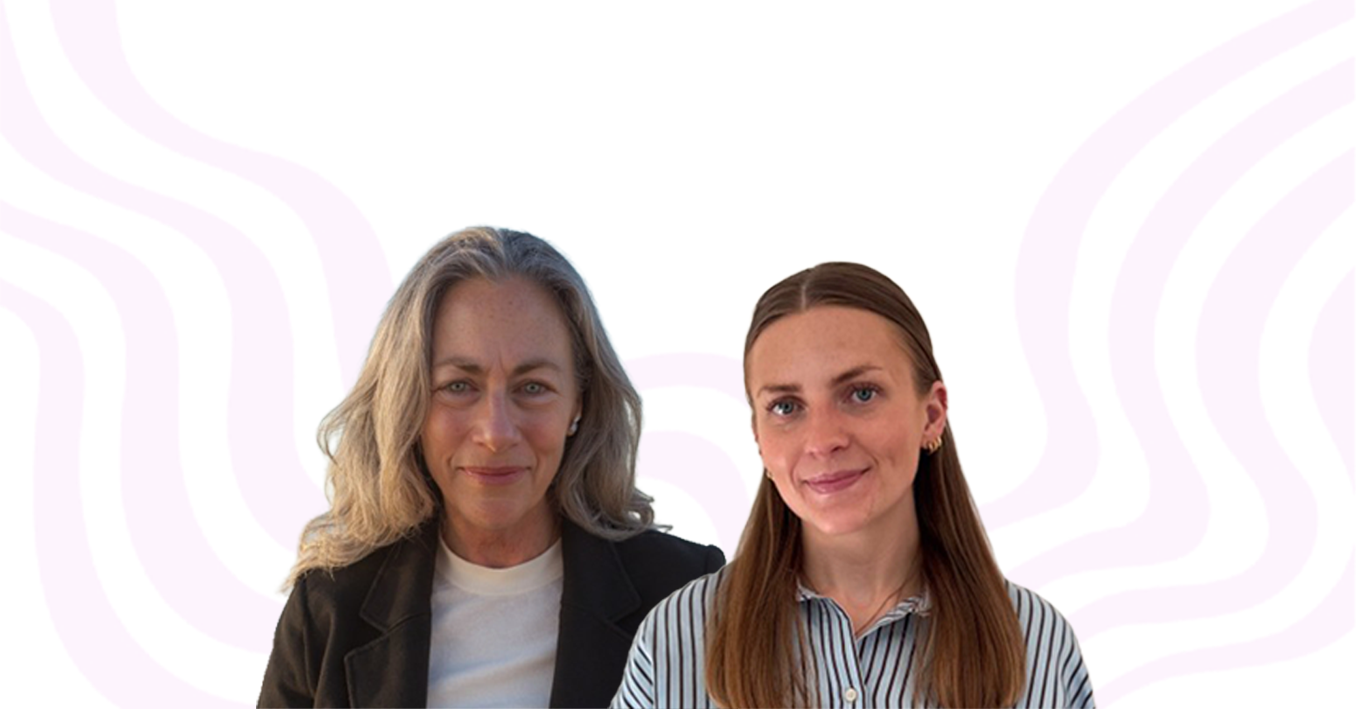
- A conversation with Julie Silber and Maria Andersson
Earlier this year, VILDA launched its first ever mentorship programme, a milestone step toward closing the diversity gap and strengthening female leadership in the Life Science industry. As the first cohort has reached its halfway point, we sat down with mentor Julie Silber and mentee Maria Andersson to reflect on their journey in the programme so far.
Meet the mentor:
Julie Silber
My background is in strategic investor relations, capital markets communications, and corporate advisory work, with a long-standing focus on the life sciences sector. Over the course of my career, I’ve worked with emerging companies, startups, public companies, CEOs, boards, and executive teams as they navigate critical moments of growth and change.
Much of my work has centered on helping life sciences companies communicate effectively with investors and other stakeholders — whether they are raising capital, preparing for or managing life as a public company, navigating IPOs, M&A, partnerships, governance issues, or broader strategic communications challenges. Life sciences has been my professional focus because the sector combines innovation, science, capital formation, and the potential to meaningfully improve people’s lives.
I’m also very interested in supporting women across all aspects of life sciences - from entrepreneurship and company-building to investing, communications, governance, and leadership.
Meet the mentee:
Maria Andersson
My academic background spans both the science and business sides of life science with a bachelor degree in Biomedicine and a Master's in Bioentrepreneurship. During my master's I also worked as a junior business consultant, focusing on market analysis and strategic development for early-stage businesses in MedTech, Biotech, and Pharma, which ultimately set me on the path toward the startup environment I work in today.
Today I lead a team of three at Ebba Biotech, a Stockholm-based startup that has commercialised innovative fluorescent tracers, where I oversee day-to-day operations and drive sales and marketing activities. I thrive at the intersection of science and business in roles where I can take initiative, explore new ideas and bridge the gap between innovation and the market.
Outside of work, I am an active member of VILDA, contributing to its communications team and passionate about spreading the network's mission to empower women in Life Science.
What drew you to VILDA and to this mentorship programme?
Julie: What drew me to VILDA was the combination of professional ambition, community, and generosity. I appreciated that it was not just about networking in the traditional sense but about creating meaningful relationships and supporting women as they build careers, companies, and leadership roles. For me, that is especially important in life sciences, where women are contributing across every part of the ecosystem – as founders, executives, investors, advisors, board members, scientists, and communicators.
I decided to mentor because I know how valuable it can be to have someone to talk things through with – someone who has experience, but who is also willing to listen, be honest, and offer perspective without judgment.
I hoped I could be useful to someone earlier in her journey, particularly around confidence, career development, communication, and navigating professional environments. I also care deeply about helping women find their place and voice in life sciences, whether they are interested in startups, emerging companies, capital markets, communications, governance, or leadership.
Maria: I actually got recommended to join the VILDA network by a former colleague, and I’m so happy that I did. Being early in my career, the network has been incredibly valuable. It’s a space where I can connect with women who have more experience than me and who are always willing to share insights from their own journeys. That openness and generosity is something I find both incredibly helpful and inspiring.
When the mentorship programme was announced, joining felt like a natural next step. I was hoping to connect with someone who could offer perspective from a leadership position and bring real experience from commercialisation in life science, helping me navigate both of those journeys at once.
What’s been most valuable about your meetings so far?
Julie: The most meaningful part has been the openness of the conversations. Our meetings have felt genuine – not forced or overly formal. I’ve appreciated the chance to hear about Maria’s goals, questions, and experiences, and to offer perspective where I can.
It has also been rewarding to see how quickly a mentoring relationship can become a real exchange, rather than just one person giving advice and the other receiving it.
Maria: Being mentored by someone with so much experience and expertise has been invaluable in itself , but what has also become clear to me is the value of simply having a trusted person outside of my immediate environment. Someone who can offer a fresh perspective, reflect with me, and help me think things through. That has been just as meaningful as any concrete advice.
Has there been anything that surprised you with the mentorship?
Julie: What surprised me most is how energizing it has been. I expected it to be rewarding, but I didn’t realize how much I would enjoy the conversations and how much they would make me reflect on my own career, choices, and lessons learned.
It’s also a reminder that mentorship does not have to be perfect or overly structured to be valuable. Sometimes the most useful conversations are simply honest ones.
Maria: I have to agree with Julie on this one, the conversations have been incredibly energizing and I feel like I always leave them with a smile on my face and more motivated. I was also surprised about how I immediately felt very comfortable which has made the conversations feel so honest and open.
What would you tell someone considering joining the next cohort as a mentor or mentee?
Julie: I would tell them to absolutely do it. You don’t need to have all the answers to be a good mentor. You need to be present, generous with your experience, and willing to listen.
For women in life sciences especially, mentorship matters. This is a sector where careers can take many different paths – from research and startups to investing, public company leadership, communications, transactions, and board service. Having someone who can offer perspective and encouragement can make a real difference. I can definitely see myself taking on more mentor roles in the future and I believe mentorship is one of the most meaningful ways we can support each other professionally, especially for women navigating leadership, career transitions, and spaces where they may not always see themselves represented.
Maria: For me it was a great decision and one I would encourage anyone to take. If you are at a point in your career where you are looking for guidance, input, or simply someone to discuss with that can offer a fresh perspective; then apply. You don’t need to have a specific problem to solve or a clear agenda walking in, sometimes just creating that space for reflection is enough to allow for a lot of growth, and I think that is something we all need more of.
Concluding remarks
Programmes like this matter because they create space for real connection. So much of professional life can feel transactional, but mentorship brings it back to people – to shared experience, trust, encouragement, and learning from one another. This is especially important in life sciences, where the work is complex, capital-intensive, and often high-stakes. Supporting women across this ecosystem is not only good for individual careers i it strengthens the sector as a whole.
Inspired by Julie’s and Maria’s story? Find more information about the VILDA mentorship programme and keep an eye out for the next cohort: https://vildanetwork.com/about-us/mentorship-program/