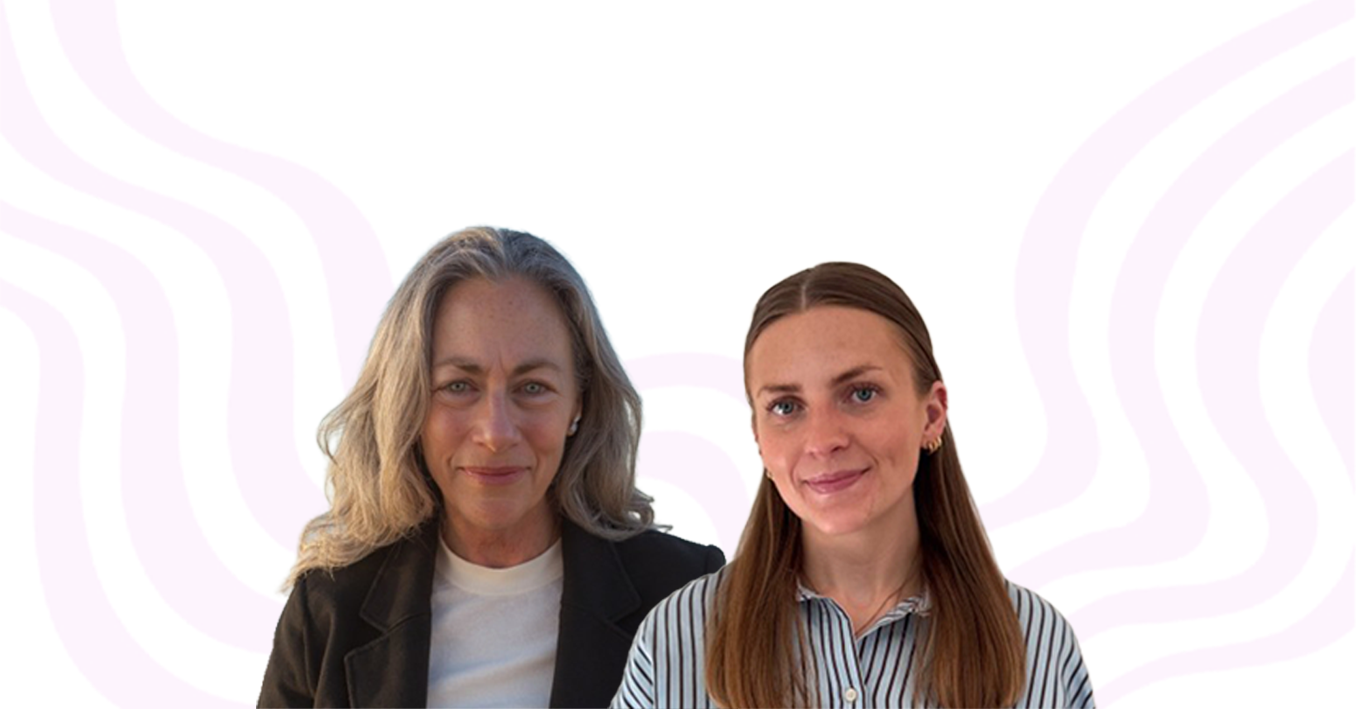
And VILDA is part of the momentum
“We did not start by asking what is broken.
We asked what becomes possible when women’s health is fully integrated.
And that reframed our entire approach”
– Christina Östberg Lloyd, Chairwoman VILDA
 On December 8, the Nordic Charter for Women’s Health 2040 was launched in Copenhagen, marking the first shared Nordic charter for women’s health, built around a common strategic framework for integration by 2040. The Charter represents a decisive shift in ambition: a move from treating women’s health as a niche concern to recognising it as a cornerstone of Nordic social and economic resilience.
Developed through the collective insight of more than 130 contributors from across Denmark, Norway, Sweden, Finland and Iceland, and presented at the Danish Parliament, the Charter moves beyond aspiration. It sets out a concrete infrastructure for systemic change through the Women’s Health Vision 2040 Framework, designed to replace fragmented initiatives with coordinated action across research, care, innovation, governance and health literacy.
At its core lies a clear understanding: women’s health is not a standalone issue, but a foundational infrastructure for equality, resilience and long-term growth in the Nordic societies.
VILDA’s role – from early groundwork to leadership in life science
VILDA recognises this moment as both important and deeply aligned with our mission. The Charter reflects a perspective we strongly share and that progress requires coordination across the entire life science ecosystem.
VILDA has been involved from an early stage in shaping the thinking behind the Nordic Charter for Women’s Health 2040. At the core of our contribution is a simple principle: a woman needs to be well to do well.
Good health enables participation.
Participation enables leadership.
And leadership accelerates change.
Designing systems, not fixing gaps
At the heart of the Charter is a biological and societal reality long overlooked. Women’s bodies are not smaller versions of men’s. Every cell is sexed, hormones influence health far beyond reproduction, and women spend around 25% more of their lives in poor health, much of it during working age.
We see that systems built on incomplete data are now being scaled through digitalisation and AI, turning historical blind spots into future standards. We also see that progress rarely fails due to a lack of solutions, but because leadership, competence and influence remain fragmented across the ecosystem.
This is why the Charter matters. By shifting the focus from isolated problems to shared infrastructure, it aligns research, care, innovation, governance and health literacy so existing knowledge can translate into standard practice.
From cost to value
One of the Charter’s most important shifts is how women’s health is framed.
Women live longer than men, yet experience a disproportionate share of ill health during working age. Historically, this has been treated primarily as a cost. The Charter challenges that view.
Healthy women are economic actors, innovators, caregivers and leaders. Closing the women’s health gap is estimated to unlock USD 30–50 billion annually in the Nordic region alone, positioning women’s health as a driver of productivity, innovation and societal resilience.
Turning vision into reality
As an independent, non-profit network, we focus on strengthening the human infrastructure required to turn systemic ambition into real-world impact. By connecting women across life sciences and turning networks into access, influence and opportunity, we contribute to the conditions the Charter identifies as critical for success.
“We’re not asking for better health standards for women – we’re designing them.”
– Women’s Health Vision 2040