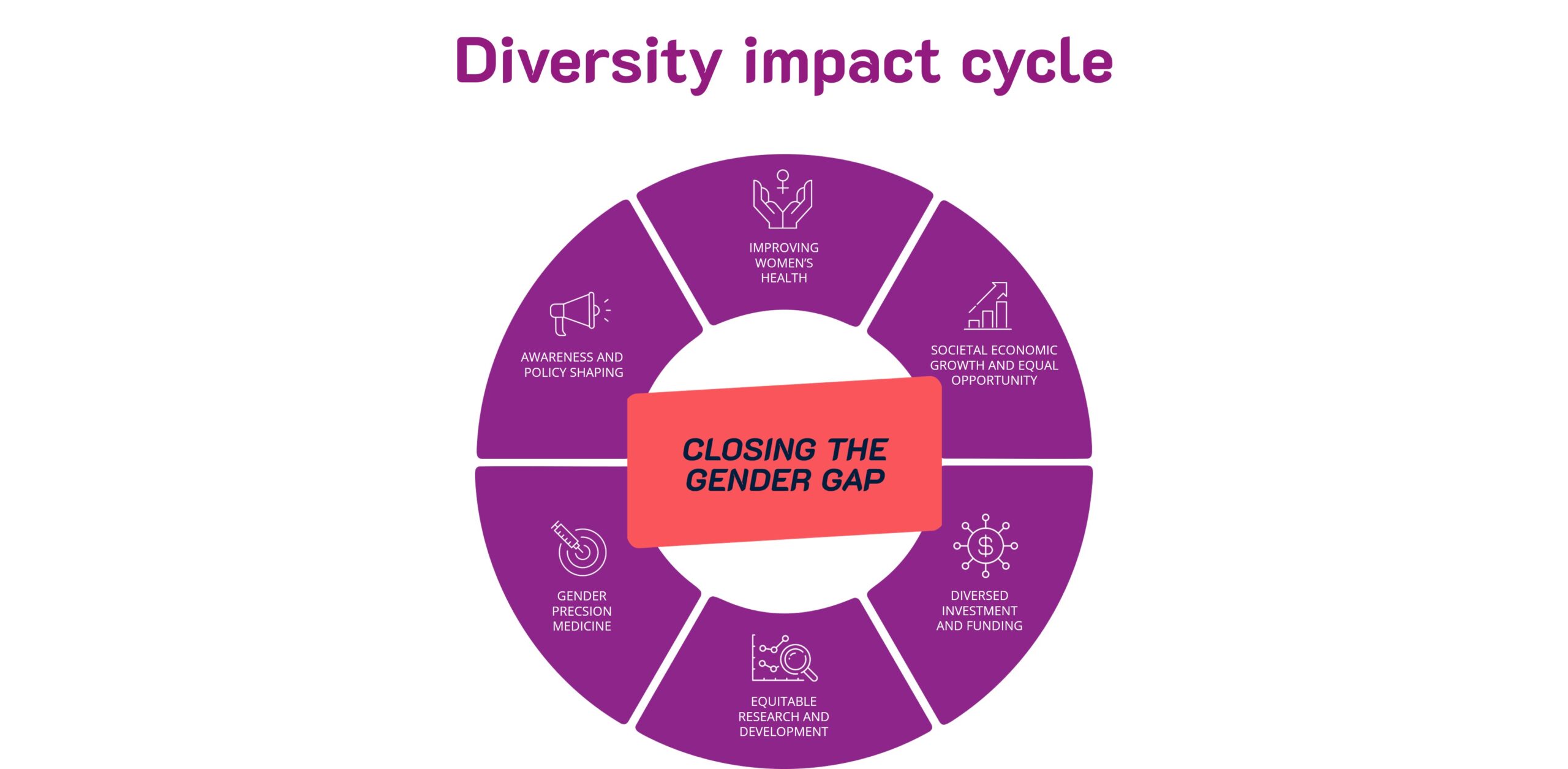
Women are well represented in education and in many roles within life science, but few reach the sector’s highest decision-making forums. Now the network VILDA is launching the Diversity Impact Cycle, a model designed to highlight how women’s health, leadership and investments influence the sector’s capacity for innovation. The network’s 300 members together represent more than 7,500 years of experience from the sector.
Analyses from SwedenBIO and VINNOVA show that women’s representation clearly decreases the higher up in the life science sector’s decision structures one goes. At the same time, VILDA’s member survey shows that there is a large pool of experienced female leaders in the sector, but that barriers remain, including unequal compensation, limited access to decision-making forums and uneven opportunities for leadership positions. Diversity Impact Cycle is VILDA’s initiative to contribute to change.
“There is no shortage of competent female leaders in Swedish life science. Within VILDA there is more than 7,500 years of collective experience, yet far too few reach the forums where decisions are actually made. Our member survey clearly shows which barriers still slow women’s path to the highest positions,” says Christina Östberg Lloyd, Chair of VILDA.
The Diversity Impact Cycle model illustrates how investments in women’s health, leadership, research and funding influence one another. It also highlights the need for more equitable research and better sex-disaggregated data—an issue that is becoming increasingly important as data-driven medicine and AI transform how research, healthcare and drug development are conducted. At the core of the model is the importance of professional networks, mentors and sponsors—factors that both VILDA’s member survey and previous studies identify as crucial for career development.
“The Diversity Impact Cycle puts the spotlight on how women’s health, leadership, research and investments are interconnected. The model has already gained strong support from leading voices in life science and is helping to move the issue higher up the agenda among decision-makers in the sector,” says Christina Östberg Lloyd.
With the Diversity Impact Cycle as a strategic foundation, VILDA aims to strengthen its role as a unifying force, a relevant voice in public debate and a driving actor in Swedish life science. The ambition is to influence how the sector views women’s health, leadership, investments and innovation—and to contribute to decisions that better leverage the full competence of the sector.